


West Virginians will go to the polls on Nov. 3 to pick the people to fill federal jobs like U.S. senator and U.S. representative all the way down to state legislative seats and county commissioners.
Voting in Kanawha County
In Kanawha County, like around West Virginia, early voting starts on Oct. 21.
You can vote in-person early from Oct. 21 through Oct. 31. Here’s a list of all of the early voting locations and hours around the state, but to find out more specifics about Kanawha County, call the county clerk at (304) 357-0130.
Voting by mail is only available for West Virginians who are unable to vote in person for reasons like illness, incarceration, work schedule and travel. Here’s more information about voting absentee.
New this year: voters will be required to show a photo ID when they go to the polls. County clerks and the secretary of state can also issue voter ID cards that meet these requirements.
On Election Day, Nov. 3, polls in Kanawha County will be open 6:30 a.m. to 7:30 p.m. You can find your polling place by entering your information here.
Federal races
U.S. Senate


On the Record: candidate responses
Mountain State Spotlight asked each candidate to rate their level of agreement with four statements. Here are the statements and the responses we received.
Issue 1: I agree with President Donald Trump that FEMA should be eliminated and that the primary responsibility for handling disasters such as flooding and tornadoes should rest with state and local governments.
Issue 2: The federal government should provide incentives to energy and manufacturing companies, including relaxing regulations, to help keep them operating in West Virginia.
Issue 3: As West Virginians face rising costs of living and gas prices, I will prioritize the domestic welfare of my constituents over foreign interventions such as the war in Iran.
Issue 4: I will prioritize the autonomy and privacy of my constituents when voting on bills related to artificial intelligence and data centers.
U.S. House of Representatives


On the Record: candidate responses
Mountain State Spotlight asked each candidate to rate their level of agreement with four statements. Here are the statements and the responses we received.
Issue 1: I agree with President Donald Trump that FEMA should be eliminated and that the primary responsibility for handling disasters such as flooding and tornadoes should rest with state and local governments.

Issue 2: The federal government should provide incentives to energy and manufacturing companies, including relaxing regulations, to help keep them operating in West Virginia.
Issue 3: As West Virginians face rising costs of living and gas prices, I will prioritize the domestic welfare of my constituents over foreign interventions such as the war in Iran.
Issue 4: I will prioritize the autonomy and privacy of my constituents when voting on bills related to artificial intelligence and data centers.
State constitutional amendment
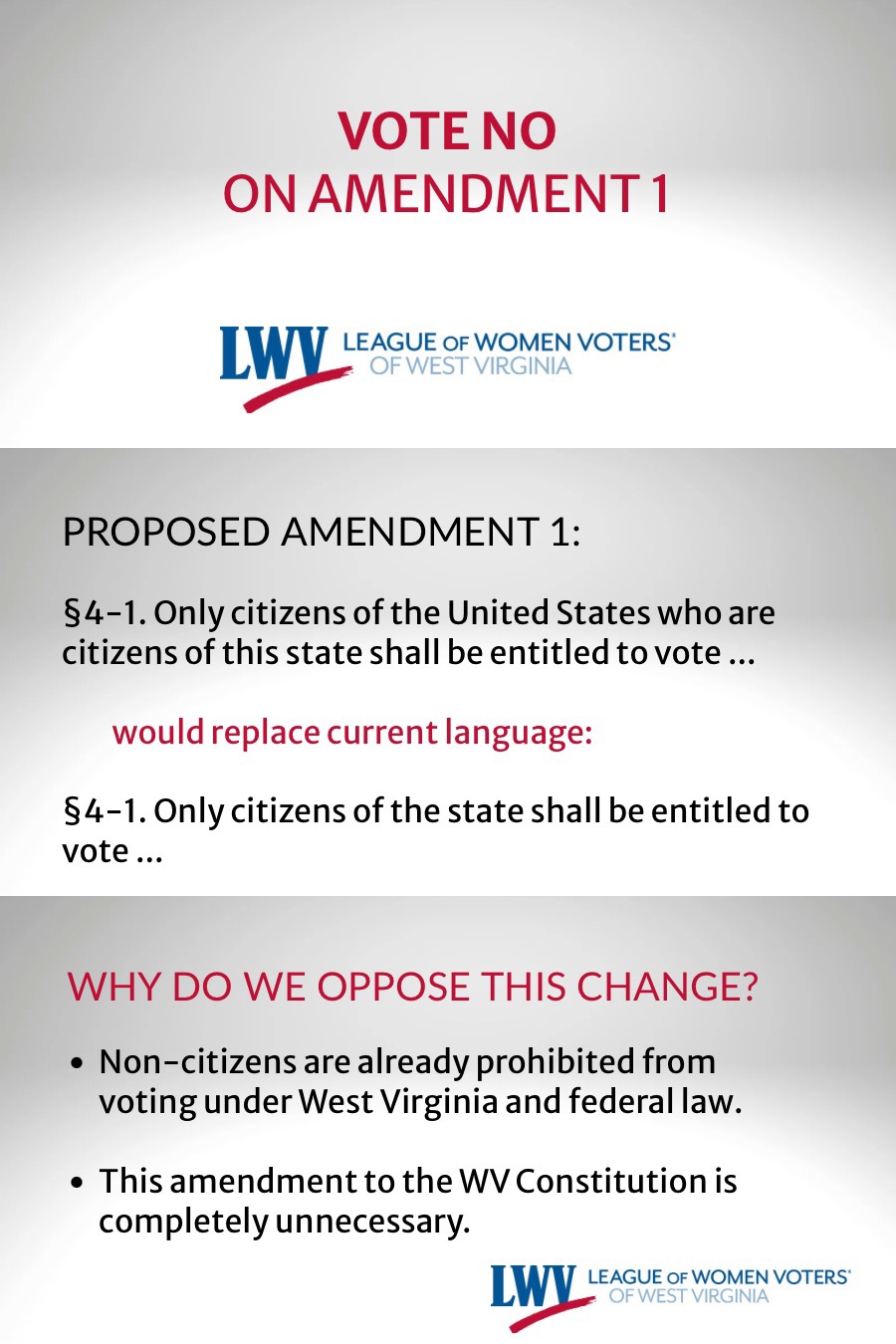
Citizenship Requirement to Vote in West Virginia Elections Amendment
Every West Virginia ballot will contain the following constitutional amendment:
Summary of Purpose: This amendment provides that in all elections held in West Virginia only citizens of the United States who are citizens of this state are qualified to vote.
Instructions to Voters: To vote in favor of the Amendment submitted, darken the oval next to “FOR”. To vote against the Amendment, darken the oval next to “AGAINST”.
Non-citizens are already blocked from voting in West Virginia elections per state code. If a simple majority of more than 50% of voters approves this amendment, this would add the prohibition to the state constitution.
The resolution that put this measure on the ballot was sponsored by Sen. Patricia Rucker, R-Jefferson, and approved unanimously by both the state Senate and House of Delegates. Similar language is included in the American Legislative Exchange Council’s “Essential Policy Solutions for 2026,” and the amendment is supported by Americans for Citizen Voting, which advocates for similar policies around the country. It’s opposed by the League of Women Voters of West Virginia, which calls it “completely unnecessary.”
West Virginia Legislature
Need to know which West Virginia House or Senate district you live in?
Who you see on your ballot for West Virginia House and Senate depends on where you live. Enter your address in the tool below.
Jump to:
Senate District 7


On the Record: Candidates did not respond to Mountain State Spotlight’s survey.
Senate District 8


On the Record
Mountain State Spotlight asked each candidate to rate their level of agreement with five statements. Here are the statements; click the arrow to see the responses we received.
West Virginia should fund infrastructure such as clean drinking water, high-quality roads and bridges, and local public schools before passing additional income tax cuts.
The best way to ensure every West Virginia child receives a quality education is to ensure the Hope Scholarship is fully funded for all students with no eligibility restrictions.
When federal funding is cut for social services like SNAP and Medicaid, the state should step in to ensure eligible West Virginians still have access.
Legislation around data centers, namely 2025’s HB 2014, should be revised to return meaningful oversight and authority over such projects to local communities and governments.
Lawmakers should direct more government economic development resources toward initiatives recommended by the state Chamber of Commerce, like childcare, high-speed internet and workforce training.
Senate District 17


On the Record
Mountain State Spotlight asked each candidate to rate their level of agreement with five statements. Here are the statements; click the arrow to see the responses we received.
West Virginia should fund infrastructure such as clean drinking water, high-quality roads and bridges, and local public schools before passing additional income tax cuts.
The best way to ensure every West Virginia child receives a quality education is to ensure the Hope Scholarship is fully funded for all students with no eligibility restrictions.
When federal funding is cut for social services like SNAP and Medicaid, the state should step in to ensure eligible West Virginians still have access.
Legislation around data centers, namely 2025’s HB 2014, should be revised to return meaningful oversight and authority over such projects to local communities and governments.
Lawmakers should direct more government economic development resources toward initiatives recommended by the state Chamber of Commerce, like childcare, high-speed internet and workforce training.
Senate District 17 — Unexpired


On the Record
Mountain State Spotlight asked each candidate to rate their level of agreement with five statements. Here are the statements; click the arrow to see the responses we received.
West Virginia should fund infrastructure such as clean drinking water, high-quality roads and bridges, and local public schools before passing additional income tax cuts.
The best way to ensure every West Virginia child receives a quality education is to ensure the Hope Scholarship is fully funded for all students with no eligibility restrictions.
When federal funding is cut for social services like SNAP and Medicaid, the state should step in to ensure eligible West Virginians still have access.
Legislation around data centers, namely 2025’s HB 2014, should be revised to return meaningful oversight and authority over such projects to local communities and governments.
Lawmakers should direct more government economic development resources toward initiatives recommended by the state Chamber of Commerce, like childcare, high-speed internet and workforce training.
House District 52


On the Record: Candidates did not respond to Mountain State Spotlight’s survey.
House District 53


On the Record: Candidates did not respond to Mountain State Spotlight’s survey.
House District 54


On the Record
Mountain State Spotlight asked each candidate to rate their level of agreement with five statements. Here are the statements; click the arrow to see the responses we received.
West Virginia should fund infrastructure such as clean drinking water, high-quality roads and bridges, and local public schools before passing additional income tax cuts.
The best way to ensure every West Virginia child receives a quality education is to ensure the Hope Scholarship is fully funded for all students with no eligibility restrictions.
When federal funding is cut for social services like SNAP and Medicaid, the state should step in to ensure eligible West Virginians still have access.
Legislation around data centers, namely 2025’s HB 2014, should be revised to return meaningful oversight and authority over such projects to local communities and governments.
Lawmakers should direct more government economic development resources toward initiatives recommended by the state Chamber of Commerce, like childcare, high-speed internet and workforce training.
House District 55

On the Record: Candidates did not respond to Mountain State Spotlight’s survey.
House District 56

On the Record: Candidate did not respond to Mountain State Spotlight’s survey.
House District 57

On the Record: Candidate did not respond to Mountain State Spotlight’s survey.
House District 58


On the Record: Candidates did not respond to Mountain State Spotlight’s survey.
House District 59


On the Record
Mountain State Spotlight asked each candidate to rate their level of agreement with five statements. Here are the statements; click the arrow to see the responses we received.
West Virginia should fund infrastructure such as clean drinking water, high-quality roads and bridges, and local public schools before passing additional income tax cuts.
The best way to ensure every West Virginia child receives a quality education is to ensure the Hope Scholarship is fully funded for all students with no eligibility restrictions.
When federal funding is cut for social services like SNAP and Medicaid, the state should step in to ensure eligible West Virginians still have access.
Legislation around data centers, namely 2025’s HB 2014, should be revised to return meaningful oversight and authority over such projects to local communities and governments.
Lawmakers should direct more government economic development resources toward initiatives recommended by the state Chamber of Commerce, like childcare, high-speed internet and workforce training.
House District 60


On the Record
Mountain State Spotlight asked each candidate to rate their level of agreement with five statements. Here are the statements; click the arrow to see the responses we received.
West Virginia should fund infrastructure such as clean drinking water, high-quality roads and bridges, and local public schools before passing additional income tax cuts.
The best way to ensure every West Virginia child receives a quality education is to ensure the Hope Scholarship is fully funded for all students with no eligibility restrictions.
When federal funding is cut for social services like SNAP and Medicaid, the state should step in to ensure eligible West Virginians still have access.
Legislation around data centers, namely 2025’s HB 2014, should be revised to return meaningful oversight and authority over such projects to local communities and governments.
Lawmakers should direct more government economic development resources toward initiatives recommended by the state Chamber of Commerce, like childcare, high-speed internet and workforce training.
House District 61


On the Record
Mountain State Spotlight asked each candidate to rate their level of agreement with five statements. Here are the statements; click the arrow to see the responses we received.
West Virginia should fund infrastructure such as clean drinking water, high-quality roads and bridges, and local public schools before passing additional income tax cuts.
The best way to ensure every West Virginia child receives a quality education is to ensure the Hope Scholarship is fully funded for all students with no eligibility restrictions.
When federal funding is cut for social services like SNAP and Medicaid, the state should step in to ensure eligible West Virginians still have access.
Legislation around data centers, namely 2025’s HB 2014, should be revised to return meaningful oversight and authority over such projects to local communities and governments.
Lawmakers should direct more government economic development resources toward initiatives recommended by the state Chamber of Commerce, like childcare, high-speed internet and workforce training.
County races
Kanawha County levies
School levy
Special election to authorize additional levies for the fiscal years beginning July 1, 2029, July 1, 2030, July 1, 2031, July 1, 2032, and July 1, 2033, for the purpose of paying the general current expenses of The Board of Education of the County of Kanawha, for the following purposes, in accordance with the order of The Board of Education of the County of Kanawha entered on date: August 3, 2026.
Purposes for Which Additional Funds are Needed
Instruction, Student Services, and Operations
Textbooks, instructional materials, classroom and vocational supplies and equipment, furniture, curriculum enhancements, technology, library and health services, staff development, distance learning, driver’s education, special education services, extended learning opportunities; additional career and technical education programs for middle schools, expanded robotics program supplies and equipment, elementary art instruction, and WVU Extension services; additional counselors, nurses, special education teachers and aides, custodial and maintenance staff; Title IX and 504 compliance services, transportation services, child nutrition program contributions, insurance, postage, contracted services, legal and audit services, and other expenses necessary for efficient school system operations.
Approximate total annual cost: $32,871,873
Educator and Employee Salaries and Benefits
Professional, service, substitute, supplemental, and extracurricular salaries; additional personnel positions not provided through the state aid funding formula; hiring expenditures; personnel costs in excess of 200 contract days; staff travel; employee benefits and payroll-related expenses, including retirement, health insurance, FICA, unemployment, workers compensation, income protection benefits, and continued free dental and optical coverage for full-time regular employees.
Approximate total annual cost: $14,576,930
Facilities, Safety, Maintenance, and Technology
Construction, repairs, maintenance, roofing, HVAC improvements, paving, ADA compliance projects, energy management, utilities, fire code corrections, asbestos abatement, building and grounds upkeep, and equipment replacement; vehicle and bus fleet maintenance and upgrades; copier and technology leases, communications systems, transportation and maintenance equipment, continued school safety and security personnel, fire alarm inspections, safety equipment, security upgrades, bus safety compliance, cybersafety, pest management, rubber mulch, and other measures necessary to maintain safe working and learning environments.
Approximate total annual cost: $9,372,624
Athletics and Extracurricular Activities
Athletic and extracurricular program support, continued coaching supplements and athletic trainers, facility improvements, community programs and services, playground upgrades including accessibility equipment for special needs, high school football field turf replacement and/or upgrades, turf maintenance, transportation for extracurricular activities, and related student activity expenses.
Approximate total annual cost: $10,250,000
*In the event of a building closure, consolidation, or a significant decline in student enrollment, amounts designated for these purposes may be used for other purposes set forth herein. No excess levy funds shall be allocated to public charter schools.
The amounts listed for the various purposes of this levy are estimates. The Board of Education may adjust expenditures and reallocate funds among authorized purposes as necessary to meet operational and programmatic needs. In the event the actual amount collected for the purposes set forth above is less than the approximate annual amounts allocated for any of the fiscal years, the Board is authorized and empowered to determine in its discretion which one or more of the above-stated purposes shall be reduced for each such fiscal year.
The Board of Education of the County of Kanawha is hereby authorized and empowered to expend, during the term of this levy, the surplus, if any, accruing in excess of the above amounts needed for any of the above stated purposes, plus excess collections due to increased assessed valuations for the enrichment, supplementation, operation, and improvement of educational services and/or facilities in the public schools and buildings owned and operated by the Board of Education of the County of Kanawha.
The maximum additional rate of levy in cents per one hundred dollars of assessed valuation on each class of property within Kanawha County School District for the fiscal years beginning July 1, 2029, July 1, 2030, July 1, 2031, July 1, 2032, and July 1, 2033, are as follows:
Class I 21.91¢ per $100 of assessed valuation
Class II 43.82¢ per $100 of assessed valuation
Class III 87.64¢ per $100 of assessed valuation
Class IV 87.64¢ per $100 of assessed valuation
The years to which the additional levy shall apply if authorized by the voters, are the fiscal years beginning July 1, 2029, July 1, 2030, July 1, 2031, July 1, 2032, and July 1, 2033.
Library levy
Special election to authorize additional levies for the fiscal years beginning July 1, 2030, July 1, 2031, July 1, 2032, July 1, 2033, and July 1, 2034, in the amount of $3,183,675 annually, for the purpose of paying the general current expenses of The Board of Education of the County of Kanawha, for the following purposes, in accordance with the order of the Board of Education of the County of Kanawha entered on August 3, 2026:
Purpose for Which Additional Funds are Needed in Each Fiscal Year
Support for Public Libraries in Kanawha County
Kanawha County Public Library – Partially fund the Kanawha County Public Library to operate the Kanawha County Public Library (KCPL) system including the Main Library in Charleston, Clendenin Branch Library, Cross Lanes Branch Library, Dunbar Branch Library, Elk Valley Branch Library, Glasgow Branch Library, Marmet Branch Library, Riverside Public Library, Saint Albans Branch Library, Sissonville Branch Library, and the Mobile Library (Bookmobile).
$2,912,108 in each fiscal year
South Charleston Public Library – Partially fund the operations of the South Charleston Public Library.
$221,902 in each fiscal year
Nitro Public Library – Partially fund the operations of the Nitro Public Library.
$49,665 in each fiscal year
TOTAL PUBLIC LIBRARY SUPPORT
$3,183,675 in each fiscal year
In the event the amount designated for the purposes set forth above is more than the amount required for such purpose, any excess funds may be used for any other purposes set forth above.
In the event that tax revenues received in any fiscal year are less than the maximum amount authorized or hereunder, expenditures may be reduced in any particular category or categories as may be required.
No excess levy funds shall be allocated to public charter schools
The Board of Education of the County is hereby authorized and empowered to expend, during the term of this levy, the surplus, if any, accruing in excess of the above amounts needed for any of the above stated purposes, plus excess collections due to increased assessed valuations for the enrichment, supplementation, operation, and improvement of services and/or facilities in the public libraries of the County of Kanawha.
The maximum additional rate of levy in cents per one hundred dollars of assessed valuation on each class of property within Kanawha County School District for the fiscal years beginning July 1, 2030, July 1, 2031, July 1, 2032, July 1, 2033, and July 1, 2034, is as follows:
Class I 1.04¢ per $100 of assessed valuation
Class II 2.08¢ per $100 of assessed valuation
Class III 4.16¢ per $100 of assessed valuation
Class IV 4.16¢ per $100 of assessed valuation
Kanawha County Commission
What does a county commission do?
Every West Virginia county has an elected county body that governs it. These officials are elected to six-year terms; their responsibilities include overseeing county tax dollars, supervising the county election process, maintaining the county courthouse and funding county services like libraries, ambulances, fire services and trash pick up. Candidates have to be at least 18 years old, and live in the magisterial district they’re vying to represent.


Kanawha County Magistrate
What does a county magistrate do?
Every West Virginia county has at least two magistrates, while more populated counties have up to ten. These are the people tasked with enforcing state and municipal laws, as well as court procedures. They hear civil cases where less than $10,000 is at stake, misdemeanor criminal cases and do preliminary examinations in felony cases. They also issue domestic violence emergency protective orders and can serve in the place of a mental hygiene commissioner to involuntarily commit people to hospitals.


Charleston city races
Charleston Mayor


Charleston Treasurer

Charleston Municipal Judge
Charleston City Council
At Large (Vote for six)


Ward 1

Ward 2

Ward 3

Ward 4

Ward 5

Ward 6

Ward 7

Ward 8

Ward 9

Ward 10

Ward 11

Ward 12

Ward 13

Ward 14

Ward 15

Ward 16

Ward 17


Ward 18


Ward 19

Ward 20

South Charleston city races
South Charleston Mayor

South Charleston Clerk
South Charleston Municipal Judge


South Charleston City Council
Ward 1

Ward 2

Ward 3

Ward 4

Ward 5

Ward 6

Ward 7
Ward 8
These are all of the races that are listed on the West Virginia Secretary of State’s website, but there may be other local races on your ballot! For more information about Kanawha County races call the county clerk at (304) 357-0130.
If you see an error in our voter guide, or want to provide more information about one of the candidates, please email us at contact@mountainstatespotlight.org.