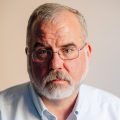
Back in July, we asked incumbent state Del. Marty Gearheart if he had anything to add to his answers to questions about community redevelopment, the high costs of medical insurance and homelessness.
“It seems to me you address a lot of issues that are far afield for what I address and my party addresses,” Gearheart said. “I would prefer to talk about lessening the tax burden on all West Virginians.”
That answer convinced me of the importance of the approach Mountain State Spotlight has taken over the last year as we’ve covered the 2024 primary and general elections.
Reporter Henry Culvyhouse spent a couple of days in Gearheart’s district, asking Mercer County residents what they wanted candidates for public office to be talking about as they asked for votes. The result was a nuanced profile of Bluefield and Princeton. These are communities that have taken some tough shots. But folks there were working hard to come back and wanted a little more help from the state to get there.

And Henry’s questions for Del. Gearheart were drawn from his discussions with those residents — the delegate’s constituents — asked in a respectful way aimed at getting answers voters could use to make informed decisions.
It seems important that a state delegate (and perhaps his party) are addressing different issues than what that delegate’s constituents want to hear about. But in the runup to the 2024 election, there is a fair amount of that going on in West Virginia and across the country.
Over the last six months, Mountain State Spotlight staff crisscrossed the state, talking to more than 500 West Virginians across visits to all 55 counties. We hosted events in six communities, from Wheeling to Welch. And our reporters took trips to every corner of the state, visiting our cities, towns and hills and hollows.
This all started with our belief that elections should be more about West Virginians and their communities, and less about horse race polls or attack ads. Using The Citizens Agenda, we set out to help our neighbors take back the political process.
We began with a simple question: What do you want to hear candidates talking about as they ask for your vote?
Everywhere we went, there were common refrains from voters: We need more substance abuse treatment and recovery programs. We need clean and reliable water. Our roads need to be fixed or upgraded. Our community needs more jobs, better schools, affordable child care, and a more responsive government.
Our reporters found a lot of West Virginians who were digging in, trying to make their part of the state better. Most didn’t mind doing that hard work, but many also said they would like to see the state do more to help.
We also heard that lawmakers focus too much on issues that can tend to divide West Virginians, and not enough on things that can bring us all together.

For example, in McDowell County, we heard a desire to focus less on what the Rev. Brad Davis called “culture war issues” and more on the ingredients for building a post-coal economy, like access to food, water and health care.
“They’re not focusing on the quality of life,” Davis said at our event in Welch.
In other places, like Logan County, we found plenty of examples of West Virginians who don’t really trust politics anymore. Others are just sick and tired of empty promises.
We read a lot about young people leaving, but often it’s just old people lamenting this trend. Our reporters actually talked to some young people – in Lincoln County and in Wetzel and Tyler counties – to lift up those voices.
As we heard more and more from voters, we started putting their questions to the candidates. When we started this work, we worried about what to do when none of the candidates would talk to us.
After all, our organization is still only four years old. A lot of politicians don’t feel the need to talk to the press, let alone to a Charleston-based outlet they and their constituents have never even heard of.
But broadly speaking the results of this effort have been good. Some Republican incumbents with no general election opposition have talked to us. In competitive races, we’ve been able to publish some lengthy answers in which candidates talk in some detail about the overdose crisis or economic development or water and sewer problems or family violence. In today’s political environment — and with the decline of local media — this is a rare thing that is so important to give voters.

At the same time, the response to our outreach to more than 200 candidates wasn’t what it should have been. Only about a quarter of candidates answered the questions we developed from reader input.
This was our first election doing this as a major newsroom project, so it’s been a learning process. One thing readers asked us for that we promise to get better at next time is comparing what incumbents are saying with what they are doing when they come to Charleston. As we finish our campaign coverage, some major stories about the races for governor and senator seek to provide a bit more of that.
National media has tried to say that people in places like our beloved West Virginia vote against our own interests.
And we did certainly find examples of powerful politicians in West Virginia who are campaigning on protecting gun rights, outlawing abortion and continuing the extractive economy, while their constituents wanted to hear a lot more about making substance abuse disorder treatment more easily available.
Maybe there’s a powerful disconnect here. Maybe there’s something more cynical going on. Either way, more information is a path forward for our state.
Mountain State Spotlight’s bold and ambitious mission is to help West Virginians make our state a better place by delivering sustained outrage journalism that holds the powerful accountable and lifts up voices that aren’t always heard.
As we’ve visited your community and so many others, one thing we’ve learned is that we have our work cut out for us.